Farzana’s Story of Hope

Farzana came to House of Ruth less than 6 months ago facing a daunting set of challenges. She was previously taking residence at another transitional housing program when her grandchildren needed her. The three children of her daughter were entangled in a web of legal issues within the system and had no stable home situation. When she came to House of Ruth her primary goal was crystal clear – to secure custody of her three beloved grandchildren.

At that time, Farzana’s grandchildren were scattered among various family members, creating an emotionally taxing situation for all involved. She knew they needed a stable environment in order to provide them with the care and love they deserved. Her initial hope was to secure a voucher that would cover her grandchildren’s needs, but despite her efforts, this proved to be a challenging task and she turned to House of Ruth staff for support.

Not only was Farzana facing the daunting challenge of reuniting her family but was also enduring the pain that accompanied her 5 year-long battle with breast cancer. After seeking different treatment options she eventually underwent a double mastectomy and is continuing ongoing radiation. Despite her health struggles, Farzana continued with her employment as a hairdresser knowing that she had a responsibility to care for her grandchildren and help ensure they had a bright future. Her dedication to her family and her work did not go unnoticed and staff and residents would regularly check in on her to ensure she was taking time to take care of herself.

Now thanks to her incredible tenacity and hard work alongside House of Ruth’s guidance Farzana has secured the insurance and benefits that she needed in order to reunite with her grandchildren and begin acting as their primary caregiver. She mentioned that stable housing and the presence of her beloved grandchildren have laid the foundation for her to take better care of her health. Thank you for helping to provide the resources and support needed at a critical time in their lives.

Thanks to your support and Farzana’s determination to stay motivated and maintain a positive outlook on the road ahead the future is bright.

*Name has been changed.

To get more stories like Farzana’s straight to your inbox sign up for our newsletter!
When Lucia** first moved into to House of Ruth’s housing, she was depressed and her mental health was unstable. Lucia says she felt broken and in a very dark mindset, but the staff at House of Ruth helped her find her strengths and not focus so much on her weaknesses.  She says, “They gave me hope and positive coping skills to get through adversities and to see a positive future for me and my children.”

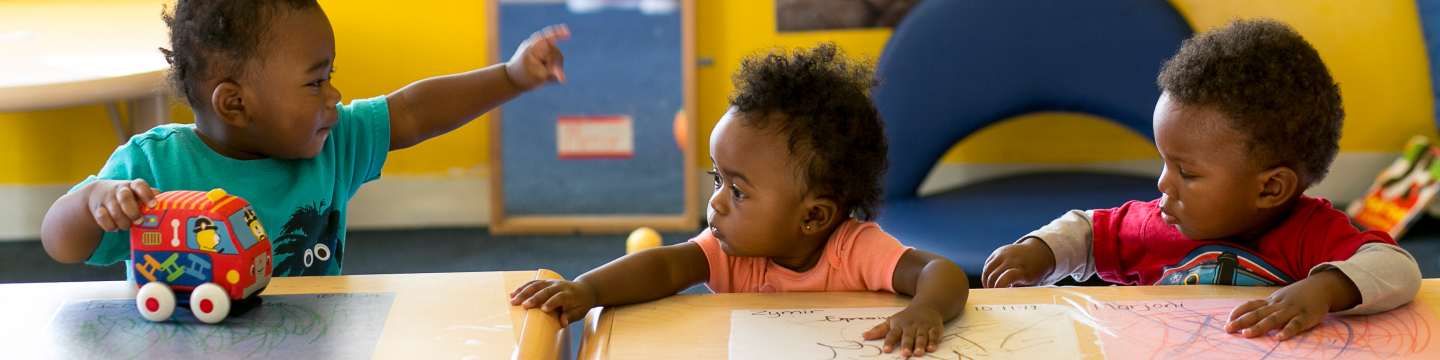
Lucia’s children have attended Kidspace, House of Ruth’s enriching childcare center for families overcoming the challenges of houselessness. In addition to daily childcare, Kidspace provides parenting support, as well as onsite speech therapy, occupational therapy, music therapy, and mental health counseling for children and their parents.  These services enable families to access comprehensive support all in one location.  Lucia says,  “Having a child with a disability can be a very challenging experience; however, I was able to have moral support and know that I didn’t have to do it all alone thanks to House of Ruth.  I was able to be connected with resources to provide for the needs of my child.”

Lucia says her journey at House of Ruth “has been a rewarding experience that has allowed me to be able to have a healthy relationship with my children. I enjoy being able to provide and care for them.” She says the parent trainings she attends continuously teach her ways to nurture and be emotionally available for her children. She is grateful to have connected to House of Ruth and, with support from caring donors like you, has truly made the most of her experience here. Through her own impressive efforts and with support from House of Ruth, Lucia has found purpose, peace of mind, and stability for her family.  Thank you for making this possible.

*Name has been changed.

To get more stories like Lucia’s straight to your inbox sign up for our newsletter!

Bahar* and her son moved into House of Ruth’s supportive housing for survivors of domestic violence just under a year ago. They left a scary situation and came into the program with nothing but each other.

When Bahar first arrived at House of Ruth, she was afraid to leave her apartment. She spoke in a whisper and was very shy around staff. Her abusive experiences were still fresh on her mind, and she was extremely concerned about safety. She received counseling at House of Ruth, where she formed a strong relationship with her therapist. With time and expert support, Bahar began to feel safer and believe in herself again.

Bahar’s son is also recovering from his experiences with domestic violence in his former home. Bahar set him up with counseling through his school, and our staff has supported both as they recover from trauma…through planning camps and fun summer adventures with him. Together, they are making new, happy memories.

Bahar has also found strength, support, and practical information in group counseling at House of Ruth. Groups focus on essential topics…like domestic violence and trauma, parenting, home management, financial planning, how to write a will, and so much more.

Bahar had a good job when she arrived at House of Ruth and earned a healthy income. Still, her money was tied up with the abuser. There were outstanding bills connected to her name…She needed new financial management practices. She faced these challenges through financial literacy training and ongoing encouragement from House of Ruth. She has made great strides and improved her finances.

Bahar’s efforts paid off. After paying down bills, she got serious about saving money. She also found the courage to pursue homeownership. Just five months ago, Bahar shared that she wanted to buy her own home. With House of Ruth, she found a realtor…and now Bahar is looking forward to closing on a house in August!

Your generosity has made a critical difference. So much has changed in just a year. Bahar continues to have safety concerns, but with support from her therapist, she is moving forward and embracing life. She has a protective order in place and plans to install a security system in her new home. Bahar’s foundation is solid. With your partnership, we will continue to be there for her as she continues to thrive… Plus, thanks to the generosity of supporters like you, Bahar can continue to see her counselor as long as she needs to.

Thank you for helping to provide the safety and support Bahar and her son needed at a critical time in their lives. Thanks to Bahar’s determination and your generosity, their future is bright.

*Name has been changed.

To get more stories like Bahar’s straight to your inbox sign up for our newsletter!

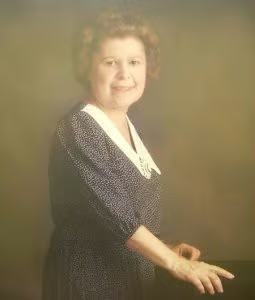
Veronica Maz was a remarkable woman who dedicated her life to helping marginalized and vulnerable populations in Washington, D.C. She was a sociology professor at Georgetown University, but her transformative journey began in 1970 when she took some of her students to visit D.C.’s “Skid Row.” Witnessing the dire conditions firsthand, Maz was deeply moved and felt compelled to take action. She left academia and started working on the streets of D.C., becoming an advocate for those facing houselessness, hunger, and abuse.

One of Maz’s significant accomplishments was her instrumental role in founding several vital social services agencies. In collaboration with others, she helped create the House of Ruth in 1976, a shelter for women who have suffered abuse and or houselessness. At its inception, the House of Ruth provided a haven for eight unhoused women in the basement of a row house. This was a groundbreaking initiative, as very few shelters were dedicated to serving women and their children in the District at that time.

In addition to House of Ruth, Veronica Maz helped found two other impactful social services agencies: Martha’s Table and So Others Might Eat (SOME). Alongside Father Horace B. McKenna, she opened Martha’s Table more than four decades ago, starting with just $93. Over the years, Martha’s Table expanded its reach, operating at multiple locations and providing educational, health and wellness, and family resources. Similarly, SOME became a renowned soup kitchen and provider of essential services for those in need.

Veronica Maz’s dedication and tireless efforts earned her the admiration and respect of many. Washington Post columnist George F. Will described her as a “hyperkinetic fireplug.” When she passed away in June 2014 at the age of 89, she was widely regarded as a shining light in D.C., having touched the lives of countless individuals by providing them with shelter, food, and a sense of hope. Maz’s legacy lives on through the organizations she helped establish. Her vision and determination continue to inspire others to work tirelessly for social justice, reminding us all of the profound impact one person can make in transforming the lives of those in need.

Many women experiencing homelessness or healing from domestic violence struggle to meet their basic needs, such as food, shelter, and healthcare. At House of Ruth, we are committed to supporting and helping women and their children. That’s why we’re launching a gift card drive to provide them with essential resources and support.

Why a Gift Card Drive? 

Gift cards provide a flexible and efficient way to provide support to our clients. By donating gift cards, we can provide survivors with the means to purchase the items they need the most, whether it’s groceries, clothing, or personal care items. This approach allows us to better meet each person’s specific needs rather than providing a one-size-fits-all solution.

Gift cards also allow survivors the ability to maintain their dignity and independence by giving them the freedom to make their own choices about what they purchase. This can be especially empowering for those who may have recently had their autonomy and decision-making abilities compromised.

Donating gift cards eliminates the need to sort, store, and transport large quantities of donated items, which can be time-consuming and expensive. This means that more of the resources can go directly to helping the individuals and families who need it the most.

How You Can Help

  • You can purchase gift cards for local grocery stores like Giant, Whole Foods, Trader Joes, or Visas/Mastercards and drop them off directly to House of Ruth at 5 Thomas Circle NW Washington DC.
  • Purchase gift cards online through our Amazon Wishlist: https://a.co/2HXkXWr
Every donation, no matter the size, can make a big difference in the lives of women who are experiencing homelessness or have been victims of domestic violence.

Are you in need of safe, discreet, reliable transportation in the Washington D.C. area regarding intimate partner violence (IPV)?
Please save this and keep it with you in case you ever need it!

This is a list of low-cost or free resources in the DMV area for individuals experiencing intimate partner violence who need help with transportation for whatever the reason may be.

DMV Metro Buses: Free/Zero-Fare Transit Services Starting in Summer of 2023

https://www.cnbc.com/2023/01/30/dc-free-bus-bill-becomes-law-zero-fare-transit.html
https://www.nbcwashington.com/news/local/transportation/dc-council-passes-bill-making-metrobus-rides-in-dc-free/3238254/

Transport DC

“Transport DC provides an alternative to paratransit transportation service for eligible MetroAccess customers who are residents of Washington, DC. Transport DC provides $5 taxi cab rides to and from any location in DC — without location restrictions — from the 1st of month through the 15th. For the remainder of the month, transportation is restricted to employment and medical treatment locations only.

Email transport.dc@dc.gov or call 202-645-7300 for more information…
Contact Email: dacl@dc.gov
Contact Phone: (202) 724-5626
Contact TTY: 711
https://dacl.dc.gov/service/transportation

Lyft/RAINN Partnership

“The program seeks to provide critical resources that survivors often need to begin their relocation journey, free of charge…RAINN’s National Sexual Assault Hotline may be connected to a free Lyft ride, depending on their needs, through
their local sexual assault service provider… RAINN, the nation’s largest anti-sexual violence organization, operates the National Sexual Assault Hotline, which offers free, confidential, 24/7 support to more than 300,000 survivors of sexual violence and their loved ones each year…Please contact RAINN’s National Sexual Assault Hotline at 1-800-656-HOPE (4673) or online.rainn.org.”
https://www.lyft.com/blog/posts/rainn_dv
★ Call 911 in the event of an emergency/immediate threat of safety or in danger

Lyft/United Way Partnership

“211 is the most comprehensive source of information about local resources and services in the country. It’s powered by people: thousands of caring, local experts are available to help, 24/7. Calls to 211 are confidential and can be anonymous. The 211 network in the United States responds to more than 20 million requests for help every year. Most calls, web chats, and text messages are from people looking for help meeting basic needs like housing, food, transportation, and health care. 211 can be accessed by phone or computer at 211.org. A toll-free call to 211 connects you to a community resource specialist in your area who can put you in touch with local organizations that provide critical services. You’ll find information about: …a safe, confidential path out of physical and/or
emotional domestic abuse”
https://www.unitedway.org/our-impact/featured-programs/2-1-1

FOR STUDENTS : George Washington Students

“Students can use the “GW Rider” app to request a GW Safe Ride. Similar to ride-sharing apps, GW Rider allows students to see their driver’s license plate, driver’s ETA and the estimated time of drop off. The GW SafeRide vehicles are also identifiable by GW-branded wrap.

You can reserve a ride in three ways:

  1. Download the “GW Rider” app in the Apple or Google Play stores. Log into the
    app using GW’s Single Sign On (SSO) and request a ride.
  2. Log in to the website (https://gw.tapridemobile.com/ride/#/) using GW’s SSO
    and request a ride.
  3. Call (202) 994-RIDE (7433) between 7 p.m. – 4 a.m.
    During other hours, the GW Guardian app offers an additional layer of security. Free
    to the GW Community, this personal safety app enables users on and off campus to,
    among other features, set a Safety Timer and assign a virtual Guardian to monitor
    your safety late at night or while traveling.”

Chat/Text/Call for Support:

★ https://www.loveisrespect.org
(resources and hotline/chat/text regarding intimate partner violence)
*24/7 support*
★ https://www.thehotline.org/ or 800-799-SAFE (7233)
(resources and hotline/chat/text regarding intimate partner violence)
*24/7 support*
★ Call 911 in the event of an emergency/immediate threat of safety or in
danger

Myths about domestic violence

A list of common myths and misconceptions about domestic violence. Challenging these myths is one of the many steps we need to take in order to prevent violence and empower people to recognize and thereby leave abusive relationships.

Myth #1
Domestic violence is an impulse control problem and happens because they “lost their temper,” and not because they meant to hurt their partner.

The truth
Abusers act deliberately and with forethought. Abusers choose whom to abuse. And use violence because it helps them gain and maintain power and control, not because they lose control of their emotions.

Myth #2
It is easy for a victim to leave their abuser, so if they don’t leave, it means they are exaggerating how bad it is.

The truth
There are many reasons why someone can’t escape: fear or threats, lack of safe options, an inability to survive economically can prevent many victims from leaving abusive relationships.

The most dangerous time for a victim can be when they attempt to leave the relationship.

Myth #3
Domestic violence only happens among younger people.

The truth
Approximately half of all elder abuse in women is thought to be domestic violence “grown old”. Older women experiencing abuse are also less likely to seek and receive help.

Myth #4
Domestic violence only affects the adults in the household.

The truth
An estimated 3.3 to 10 million children witness domestic violence annually. And there are numerous links between serious emotional and psychological problems from exposure to domestic violence.

Myth #5
Abusers are violent in all their relationships.

The truth
Most abusers do not use violence in other non-intimate relationships to resolve conflict. And often times present a different personality outside the home than they do inside, which can complicate a victim’s ability to describe their experience.

Myth #6
If a person had better self-esteem their partner wouldn’t abuse them.

The truth
Domestic violence has nothing to do with self-esteem. It is about the perpetrator wielding power and control over their loved one. It is not the victim’s fault, and will not go away with better self-esteem.

Myth #7
Domestic violence only happens in heterosexual relationships.

The truth
Domestic violence also occurs in LGBTQ relationships. In addition to the universal coercive tactics of an abuser, LGBTQ individuals may experience the added fear of being “outed” to family, friends, and peers if they leave the relationship.

Myth #8
It is not considered domestic abuse if both parties use physical violence against each other.

The truth
Assessment of domestic violence hinges on patterns of coercive behavior in order to control another person. A victim may use physical violence in self-defense.

Myth #9
Once an abuser, always an abuser.

The truth
The key to changing abusive habits is the abuser’s willingness to accept responsibility for their actions, want to change, and seek individual or group counseling away from the victim. This does NOT imply that the victim is responsible for encouraging this change nor having to forgive their abuser.